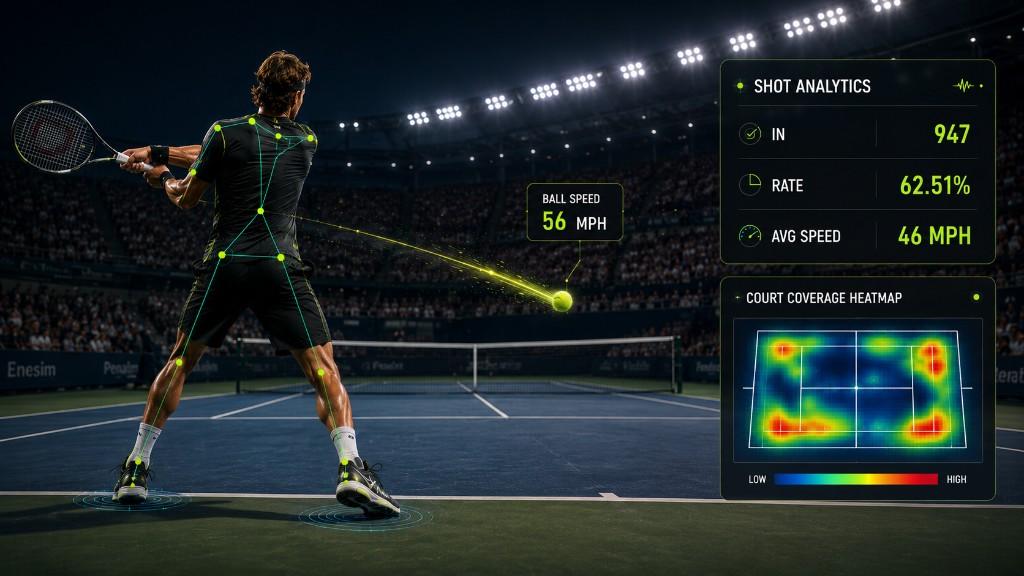

Performance Dashboard & Key Metrics

See athlete progress more clearly

The Performance Dashboard brings together training history, video review, AI-supported analysis, progress indicators, and key metrics in one connected view. Instead of relying only on memory, match results, or scattered notes, you can see what was planned, what was completed, what patterns appeared, and what should happen next.

Turn training history into actionable insight

CoachEye connects the key parts of the athlete development process:

Each part is useful on its own. The real value appears when they work together. A training plan gives the athlete a direction. The Training Hub helps you prepare better content. On-court sessions create real performance evidence. AI-supported review helps surface patterns that are easy to miss. Progress trends turn all of that history into a clearer view of development, so the next training decision is based on more than memory or short-term results.

Use CoachEye to plan training with intention: what the athlete should work on, when the session should happen, how the week should be shaped, and where recovery belongs in the process. A strong plan is not only a list of exercises. It is a rhythm of work, rest, and adaptation that helps the athlete move toward a goal without losing sight of workload and readiness.

For coaches, this makes the training process easier to explain and adjust. For athletes, it makes daily work feel connected to longer-term development. For parents and support teams, it creates visibility into whether the athlete is following a structured process instead of training randomly from session to session.


Planning helps connect daily training with weekly structure and recovery.
Training plans icon

Training plans

Good performance tracking starts before the athlete steps on court

Use CoachEye to plan training with intention: what the athlete should work on, when the session should happen, how the week should be shaped, and where recovery belongs in the process. A strong plan is not only a list of exercises. It is a rhythm of work, rest, and adaptation that helps the athlete move toward a goal without losing sight of workload and readiness.

For coaches, this makes the training process easier to explain and adjust. For athletes, it makes daily work feel connected to longer-term development. For parents and support teams, it creates visibility into whether the athlete is following a structured process instead of training randomly from session to session.
Planning helps connect daily training with weekly structure and recovery.
Training Hub icon

Training Hub

The Training Hub gives you a practical library for preparing better sessions

Instead of rebuilding every practice from scratch, you can work from ready-made drills, reusable training sessions, saved items, and content that matches the athlete's current goals. This is especially useful when a coach wants a consistent methodology across athletes, or when an athlete needs structured work outside a coach-led session.

The hub supports both discovery and repetition. You can browse for ideas, search for a specific drill, save the content you trust, and gradually build a personal training library. Over time, this makes training more consistent: the athlete is not just doing activity, but repeating purposeful work that can later be connected to session history, video review, and progress indicators.

A practical drill base helps you choose the right work for the next session.
On-court sessions icon

On-court sessions

Performance insight becomes stronger when real training is captured and stored.

CoachEye helps you keep on-court activity connected to the wider development record. You can record sessions from a Smart Court workflow or upload previously recorded training footage, keeping sessions, video, and review context in one place. This matters because important moments often become clear only after training ends: a technical habit, a movement pattern, a tactical decision, or a repeated mistake that was hard to notice in real time.

When sessions are stored consistently, the athlete's history becomes easier to review. Coaches can return to evidence instead of relying on memory. Athletes can see what actually happened. Parents and clubs can understand the process behind improvement, not only the scoreline after a match.

On-court activity becomes part of the athlete's development history.
AI-supported insights icon

AI-supported insights

AI-supported insight helps turn court activity and recorded footage into a clearer performance record

With CoachEye, AI can support recognition of events, players, and key moments during training or match play. It can help keep score, identify whether a ball is IN or OUT, and organize what happened on court into a more useful sequence of records. This becomes a major advantage during matches, tournaments, and busy training days, where coaches and organizers need reliable context without manually tracking every moment.

The same AI-supported layer is valuable after the session ends. When recordings are reviewed later, recognized events and structured records make post-analysis faster and more focused. Coaches can return to important points, athletes can see the evidence behind feedback, and clubs can preserve match or tournament context for later review. AI does not replace coaching judgment. It helps turn raw video and live activity into clearer evidence for better decisions.

Recognized events make recordings easier to review after the session.
Progress trends icon

Progress trends

Progress trends show whether training is moving the athlete in the right direction

One session can tell you something. A connected history tells you much more. The Performance Dashboard helps you follow how work accumulates across training blocks: what has been completed, which metrics are changing, which patterns repeat, and whether the athlete is moving toward better form at the right time.

This is especially important when planning for competition, recovery, or a peak performance window. Coaches can adjust the next sessions with more confidence. Athletes can see that improvement is a process, not just a feeling after a good day. Parents, clubs, and academies can understand whether development is consistent, structured, and visible across time.

Progress becomes clearer when metrics, video, and history stay connected.

Built for every role in the development process

The Performance Dashboard is designed for the full athlete development ecosystem. Each role sees the same training story from a different angle: the athlete needs ownership, the coach needs evidence, parents need clarity, and clubs need consistency across programs.

The dashboard helps them connect daily effort with long-term goals. Instead of treating each session as a separate event, athletes can understand how plans, drills, video feedback, and progress indicators fit together. This supports better ownership: the athlete can see whether they are following the plan, where improvement is appearing, and which habits still need work. Clear progress also helps motivation, because development becomes visible even when match results do not tell the full story.

For athletes icon

For athletes

Athletes can see what they are working on, how consistently they are training, and what needs attention next.

The dashboard helps them connect daily effort with long-term goals. Instead of treating each session as a separate event, athletes can understand how plans, drills, video feedback, and progress indicators fit together. This supports better ownership: the athlete can see whether they are following the plan, where improvement is appearing, and which habits still need work. Clear progress also helps motivation, because development becomes visible even when match results do not tell the full story.

For coaches icon

For coaches

Coaches can review athlete history, session quality, video evidence, and progress trends in one place.

This gives feedback a stronger foundation. A coach can prepare future sessions from the full training record, not only from memory or the latest result. The dashboard helps identify what was planned, what was completed, how the athlete responded, and where video or metrics point to the next priority. It also makes communication easier: feedback can be explained with evidence, trends can be shown over time, and the next training focus can be connected to a clear development path.

For parents icon

For parents

Parents can better understand the athlete’s development beyond match results.

The dashboard gives parents a clearer view of the process behind improvement: training history, reviewed footage, completed sessions, and progress indicators that show whether work is structured and consistent. This helps shift the conversation from “Did you win?” to “Are we building in the right direction?” Parents can see that development includes planning, repetition, recovery, feedback, and adjustment. That visibility makes it easier to support the athlete without relying only on short comments after training or competition.

For clubs and academies icon

For clubs and academies

Clubs and academies can use performance visibility to support more consistent player development across coaches, courts, and programs.

When training plans, session history, video, and progress metrics are connected, organizations gain a clearer view of how development is happening at scale. This helps leaders identify athletes who may need attention, understand whether coaching methodology is being followed, and create a more transparent system for families and staff. It also supports continuity when multiple coaches work with the same athlete, because the development record stays visible instead of living only in one person's notes.

Start tracking performance with CoachEye

Bring training plans, video analysis, session history, and performance metrics together in one connected dashboard.

Request early access to CoachEye and start building a clearer path from training to improvement.